Apples vs. chips: an experiment into food behavior

Last week I conducted an informal experiment at work. This the kind of 'scientific' experiment that J. classifies as needless and silly, since the general conclusion is quite obvious. My reasons to do that experiment were:
a) People could surprise you with their behavior,  and b) mainly, because it's fun to do experiments, c) I had a grant (meaning the raw material was paid for)

The main motivation was  to determine if people make good food choices when such choices are available. As a graduate student I often found that when stuck in the lab late in the evening or  night the only 'food' option was  the vending machine mostly full of all kinds of crappy snacks. The kind of snacks that Indra Nooyi, CEO of Pepsi food has decided to re-brand as 'fun for you'. Their other labels are 'good for you' and 'better for you'. Of course, the irony of Pepsi marketing itself as a health-food company and the relativistic nature of their labels is inescapable.  Another disturbing story that I read was that experiments on rats have shown that babies could acquire a taste for junk food in-utero.(In review of Lindstrom's book on advertising in the Economist).

At some point, I wrote to the President and the authorities to make such healthy snacks available. The University did make this available and called it M-healthy. They were not not that healthy, but better than just chips and other crap that's usually in vending machines.

Yet, it begs the question - do people actually want to eat healthy?  When polled people  it is unlikely that anyone would say something other than - "I want to eat healthy, if such choices were available." Though what people say and what they do is quite different. The actual pattern of behaviors exposes their 'revealed preferences'.

The question is that faced with an apple or a potato chip what does one do? More honestly speaking, what would I do?

The Experiment
In the company lunch room where people leave stuff to share/ give-away I placed the following items last Monday morning:
18 apples ( 11 Red Delicious, 4 Fuji, 3 Granny Smiths)
3 bags of chips (regular, multigrain and tortilla chips without any salsa)
2 packets of crackers

Null Hypothesis:
All free food is equal and will be eaten in equal amounts.


Hypothesis
The chips would be all eaten.
Apples would not be as popular.
Crackers would be more popular than apples

Observations:


Wednesday: Two bags of chips were finished. Tortilla chips were not. 13/18 apples were eaten
Thursday: All bags of chips were gone. Packet of crackers gone. 11/18 apples eaten
Monday: One packet of crackers remained. 10/18 apples remained. Interestingly, all the Granny Smith apples were gone.

It must be noted that the experimenter also was part of the experiment and ate 1 apple and some amount of chips to keep the consumption roughly equal.

Possible explanations and factors at play.


1) Chips are tastier and pound for pound offer more calories and are a better 'investment'.
2) Apples have a higher 'adoption barrier', as they have to be washed, either cut, or bit into and it can be messy with juicy apples
3) Red Delicious is not so delicious. If there were more Granny Smiths, then the ratio could have been different leading to different conclusions.
4) People bring their own apples, and not chips and were supplementing their diet with the chips that were laid out.
5) Chips don't go bad, and apples do. So after Day 3, the apples were less appealing.
6) Eating chips requires less commitment, meaning that chips can be eaten in small quantities (one chip to a dozen or more), but you have to commit to eating an entire apple.
7) Corollary to the above: you may not be hungry for an entire apple. In a sense, an apple will actually increase your caloric intake in large quanta.
8) The chips were of better quality than the apples. The experimenter admits that this was not controlled for.

Conclusions:
I leave that you to gentle reader.( I would hate to give it away). I am sure J. would appreciate my silence and absence of analysis).

PS:
What happens next?
I am curious to know what is the half-life of the apples. They still stand at 11.


Global Energy Transitions

The Economist's Global Intelligence Unit published a report on the transition of energy demand from East to West.
The trouble with reading such reports on controversial topics is that the first thing to look for is who is sponsoring the report, and who is writing the report. In almost all cases, the Economist does not have a byline, so the reports are mostly anonymous.  This report comes with the  caveat that the report and the conference was sponsored by Shell. Like all energy companies, their record has been less than stellar. One hopes that one can trust the authority of the authors: serious academics, policy makers and a long-time Greenpeace activist.
Report on Global Energy Conversation: Transitions from West to East
One the most startling facts is that India and China have increased their energy consumption by 116% and 149% in the last 20 years. In contrast, America has increased it by 19% (but their consumption was already very high). See: Key Findings

This brings me back to an excellent book that got a lot of press when it first came out, but has been somewhat been lost in the noise. Jared Diamond's Collapse. A review was posted on the literary blog. His main thesis is that civilizations have many reasons to prosper, but in many cases they fail because they fail to respond to environmental challenges appropriately. He presents case studies of  the past and present using examples from Rwanda, Easter Island, Australia, Montana, etc. 

Change of Guard: US Open 2011

What happened on Saturday was the final nail in Federer's coffin. I wished truly that I wouldn't be saying this, but after being up two matchpoints, flubbing a simple inside-out pass that hit the net cord, Federer's goose was cooked. In almost identical fashion he went down in the final set after leading 2-0. The world No. 3 ranking seems less of an aberration and more or less fitting. In my opinion his best chance to do something was at this year's US Open. He has missed that, and I would call it curtains for the Federer the Champion. Every subsequent tournament is going be a Second Act for Mr. Roger Federer. It is still true that for the next year or so, Fed will be still head and shoulders above the rest and will decimate them in a very similar fashion in the next few Grand Slams. The real problem is not the new kids on the block, the Dolgopolovs, Soderlings, Tipsarevics, Murrays and other current also-rans but the two men playing in tonight's final.

Rafael Nadal has taken tennis to another level, and Novak Djokovic has shown the  man described as a 'monster' by McEnroe can be vanquished. While my sympathies were with Federer, as a true tennis fan it is a great treat to watch the best two men in tennis battle it out in a few minutes. Federer seemed to have no problems with anybody else on the planet, and then Nadal happened and it seemed that he had some sort of mental block against the man. The lost first set at the French indicated a real issue. Quite interestingly, Nadal seems  to have 'Djokovic' problem. For the longest time Novak has been ranked No.3 and ended up meeting Federer more often. Though in recent times, as he assumed the mantle of World No.1. he's meeting Nadal more often and bested the Spaniard in the last five meetings including the Wimbledon final. Pressure seems nothing to Nadal, it seems to just vanish every time he plays a point. In comparison Djokovic seems more human. On Saturday, when he was two points from losing the match, he found humor and a smile to get back into the match, instead of the fierce glare that is the trademark of the Spaniard. That will certainly help him. At 24, he is in the greatest shape of his life, prepared to run every single ball down. Also, unlike Federer he has no issue with his backhand to combat the mad spin from Nadal's forehand court. It's going to be a great match.

I woudn't write off Nadal too easily. He has shown that he is as hungry as ever, but now he faces pressure from someone who is as relentless and cool as he is. As long as he serves well, neutralizes Nadal's spin, goes after his second serve, Novak should have no problem taking him out. He has been tested in a trying match with Federer and it will be his match to lose after the great run he has had.

My prediction #1: Novak in 4 sets if all goes well.
Prediction #2: Otherwise, whoever wins the first set.

As has been noted, the other modern great - Pete Sampras - didn't win anything for two years before his final US Open triumph. In comparison, Federer seems to be in much better shape. So, I am waiting for the aging champion to show that he still has the stuff. Though, he will need what he credited Novak for winning - luck, and a lot of it if Messrs. Nadal & Djokovic are still in business.

One era of tennis has ended and now it's the beginning of a new rivalry - Nadal and Djokovic. Men's tennis seems to have another new lease of life.

The Burden of Proof

The Toxic Substances Control Act passed in 1976, does not require manufacturers to show that chemicals used in their products are safe before they go on the market; 
Jerome Groopman, in New Yorker, May 31, 2010

The  burden of proof rests on federal agencies and external universities. Link to New Yorker article

India much after Gandhi: Reading Guha and Mishra

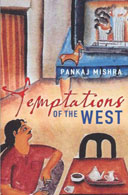
Reading Ramachandra Guha's India after Gandhi and Pankaj Mishra's Temptations of the West. This was rather by accident, but they make good reading side-by-side.

For most historians, Indian history ended with Partition, or with some extension, with the assassination of Mahatma Gandhi. The books on India history after Independence, he writes, can be counted on the fingers of one hand, or two if one is more broad-minded. Guha's book was published in 2007, released to presumably coincide with the 60th year of India's Independence, is weighty and 700+ pages long. Only being about third through the book, I oddly felt that it should have been longer. Guha writes with an extraordinary skill: the laborious scholarship and copious footnotes do not disturb the urge to keep turning the pages. As far as I can note, Guha is content, as he should be to, to mostly describe and leave conclusions to the reader. I did somewhat catch some of the legendary debate in press between Ms. Arundhati Roy and him, though I am eager to understand some of his political convictions and motivations. While Ms. Roy did claim in an interview that her views with Mr. Guha's were worlds apart, at least the have an environmental and social conscience. A sort of conscience that I see lacking in many of my local peers, who have seemed to embrace "India Shining" with careless abandon.

While Guha seems, at least so far, to be quite optimistic of the strength of Indian democracy, reading Pankaj Mishra's Temptations of the West one is left with no illusions about Indian reality of democracy. Mishra is a journalist with a keen eye and a sensibility worthy of a poet. In contrast to the Doon-school,
IIM-educated Bangalorean Guha, Mishra was born in Jhansi, grew up in small-town North India, went to school in Allahabad and spent his youth in Benares. He comes from a different milieu than Guha and correspondingly his views are darker, and I would like to think closer-to-the-ground than the firmly-grounded academic historian. The rest of the book moves on further into the rest of South Asia (more on that later), but the Indian themes, or axes as Guha calls, are pretty much the same - caste-based politics, regionalism, proto-fascist Hindutva, being Muslim in India and others.

I haven't finished reading either book and it would be premature to make a final judgement. One thing is clear that issues raging in the country today were pretty much the same in 1950. While some progress has been made, but much of the tribal population and rest of India lives in a feudal time. This sort of reality is hard to imagine from the eyes of an urban Punekar, now deracinated expat. One hopes that books help us bridge that distance.

I write this at a time when Anna Hazare's strike has just been called off after the government has acceded to his some of Team Anna's demands. The whole affair right or wrong, undoubtably signals the failure of constitutional democracy. Indeed, as Guha's book informs us that Ambedkar, the architect of the constitution, warned that Indians in Free India needed to abjure from Gandhian methods of fasts, hartals, picketing, and the like and use constitutional methods to achieve their ends. Of course, such methods have been mostly ineffective in the last 60 years. It may seem like a Quixotic idea to external observers that citizens need to move heaven and earth just to make elected representatives just accountable: meaning making them do their job.

Meanwhile I seek refuge in books.
Reality melts away.

Phrasing: Catching Song

Phrasing is super important in music and also in language. How you string words together and how you put hte building blocks together. Very intersting interview with Bobby McFerrin on  the importance of improvisation. He says that if were a teacher of music he would not start with the staff or written music. But, just with one note 'C' and let the students play that for a few weeks, then add another note 'D' and let them improvise.

He says in the interview that singing songs with lyrics sometimes interferes with interpretation. So, Bobby McFerrin tries to teach without words. He says that not many people can do it - babble nonsense syllables - for minutes on end.

Speaking of language that McFerrin uses:
Is singing for entertainment. Is it for more than entertainment? Inter-tainment?
He is full of endless word-play continues. In fact it calls it 'catching song' not 'singing song'. Words sometimes obscure meaning, but sometimes they can illuminate, especially when you are as original as Mr. Bobby McFerrin.

Bobby Ferrin: Catching Song.
Link to .mp3 of interview

Is Doing a PhD a waste of time?

This article showed up in the Economist a while ago (December, 2010) but I got to reading it only now. I am currently in what can be described as 'evangelical zeal to read magazines' that have been piling up.

While this article -- The disposable academic: Why doing a PhD is often a waste of time -- might be late in coming, it's still an interesting read in the manner of the perfect 20/20 vision of hindsight.

One thing many PhD students have in common is dissatisfaction. Some describe their work as “slave labour”. Seven-day weeks, ten-hour days, low pay and uncertain prospects are widespread. You know you are a graduate student, goes one quip, when your office is better decorated than your home and you have a favourite flavour of instant noodle....Whining PhD students are nothing new, but there seem to be genuine problems with the system that produces research doctorates (the practical “professional doctorates” in fields such as law, business and medicine have a more obvious value). There is an oversupply of PhDs. Although a doctorate is designed as training for a job in academia, the number of PhD positions is unrelated to the number of job openings. Meanwhile, business leaders complain about shortages of high-level skills, suggesting PhDs are not teaching the right things. The fiercest critics compare research doctorates to Ponzi or pyramid schemes.
It's true that it takes a number of years, and perhaps your best ones. I sometimes felt that I spent all my youth in school. Of course I was much better off than students in anthropology and physics who on average take 7-10 years. As a PhD who is no longer working in academia, and for the record most of my friends who finished one are not working in academia either, I have never regretted for a moment taking/or wasting years finishing the degree. I enjoyed doing it and I had many rich experiences that were totally unconnected with academics, which I would never have enjoyed if I had a regular 9-5 job.
Academics tend to regard asking whether a PhD is worthwhile as analogous to wondering whether there is too much art or culture in the world. They believe that knowledge spills from universities into society, making it more productive and healthier. That may well be true; but doing a PhD may still be a bad choice for an individual.
Now being done, I have not suffered greatly either. I admit that it may not reflect the experience of every PhD as it is in a 'somewhat useful' and currently 'somewhat hot' field of biomedical engineering. It may not make sense for everyone to do one. And as the article points out, everyone does not have the right motivation or reasons for doing one.
Many students say they are pursuing their subject out of love, and that education is an end in itself. Some give little thought to where the qualification might lead. In one study of British PhD graduates, about a third admitted that they were doing their doctorate partly to go on being a student, or put off job hunting. Nearly half of engineering students admitted to this. Scientists can easily get stipends, and therefore drift into doing a PhD. But there are penalties, as well as benefits, to staying at university. Workers with “surplus schooling”—more education than a job requires—are likely to be less satisfied, less productive and more likely to say they are going to leave their jobs
As the article points out there are about 100,000 PhDs minted each year and only about 16,000 new academic positions. People have to find work elsewhere, or may choose to find work elsewhere. The central assumption of the article that the PhD should lead to a academic job is not entirely correct. There are lots of well-paying, and often better-paying jobs in industry, non-profits, think-tanks, government, and startups. The article states that only 57% of the student actually finish a PhD casting some doubt on the enterprise. People quit for various reasons and I think that for many it might be the right decision. As in most things in life, the training and experience can always come handy later. I do agree that it's best to quit early. I am not quite sure if you can treat it as a 'sunk cost' if you quit in the 6th year of your program.

I do agree that there is an oversupply and universities should practice, as the article calls it, more voluntary birth-control. In addition there should be more training for PhDs who will be looking for non-academic jobs and developing soft-skills given that 90% of the people will not pursue jobs in academia.
Many of those who embark on a PhD are the smartest in their class and will have been the best at everything they have done. They will have amassed awards and prizes. As this year’s new crop of graduate students bounce into their research, few will be willing to accept that the system they are entering could be designed for the benefit of others, that even hard work and brilliance may well not be enough to succeed, and that they would be better off doing something else. They might use their research skills to look harder at the lot of the disposable academic. Someone should write a thesis about that.

Perfection

Il semble que la perfection soit atteinte non quand il n'y a plus rien à ajouter, mais quand il n'y a plus rien à retrancher.

It seems that perfection is attained not when there is nothing more to add, but when there is nothing more to remove.
Antoine de Saint Exupery
Wind, Sand and Stars (1939)

Got education? more likely to marry

From the Economist:

Data from the Census Bureau (US) show that married couples, for the first time, now make up less than half (45%) of all households.
This may seem to be bad news, but on the good news front the divorce rate has gone down with lesser marriages. This seems to imply that those who marry these days tend to stay married, or in other words, it is weeding out weak marriages.

There is more to the story, as it seems that marriage is now a privilege of the educated.
There barely was a marriage gap in 1960: only four percentage points separated the wedded ways of college and high-school graduates (76% versus 72%). The gap has since widened to 16 percentage points, according to the Pew Research Centre.
The article quotes that those without a college degree earn less and prefer to raise children out of wedlock as they cannot 'afford marriage'. I find that hard to explain. In the state of Michigan, you could walk over to the courthouse, fill out a few forms and get married for less than $30. You would probably pay more for a meal for two in the City of Ann Arbor than for getting married in court. It is perhaps understood that if that educated are more likely to get married, then they are older as well.

And as for the children born out of wedlock, the disparity is immense:
Only 6% of children born to college-educated mothers were born outside marriage, according to the National Marriage Project. That compares with 44% of babies born to mothers whose education ended with high school.

The article did not comment if those children born were out of choice. Another interesting question is: Are children better off, or rather, no worse-off in single-parent (more like single mothers) families? If there is a significant difference then the huge disparity between kids born to educated, well-off two-parent families vs. lower-educated, poorer single mother families can only get amplified in the decades to come.

Words: Misread and misheard

Over the weekend as I was transferring the clothes from the washer I noticed this scribbled on a piece of paper:

ANGER NOT WORKING, BEING FIXED. TX!

I was struck by the profundity of the message and chuckled at the absurdity of finding something like this in the laundry room. Sometimes life is like that - you never know what you find. Everybody's anger needs fixing. I am glad that the person who wrote that note at least acknowledged it. It drew a much bigger laugh a few minutes later when the reality of the message struck me.

The New Yorker (May 23, 2011) informed me about the 'karma chain' that was set in motion by Lama Pema in New York a month ago. It was an interesting experiment: Lama Pema played a version of 'Chinese Whispers' (called 'Telephone' in the U.S.). The idea was that Lama Pema at the start of the chain of 300+ people would recite three sutras that would be passed from person to person with the author Salman Rushdie at the very end of the chain to receive the final message. The Lama wanted to test the proposition "information can extremely volatile when words pass from person to person". The sutras that he read out (using his iPhone!) to person #1 in line were:

1) Like a shimmering star, or a flickering lamp
2) A fleeting autumn cloud, or a shining drop of morning dew
3) A phantom, a dream, or a bubble, so is all the existence to be seen

Even by the 20th person the messages were largely mangled from the original. Finally at the end, Salman Rushdie read out the final messages

1) Follow the glass stone. Follow the glass stone
2) The droid from hell
3) If anything exists it changes

These were 100% wrong as the Lama said. He said that not a single word that Rushdie read was the same, but in the end 'the words were not my message'. Accidentally and miraculously the listeners had listened to the gist of the message and then had collectively "put words to it". I am not sure I agree 100% with the Lama (considering #2), but it was an interesting exercise.

The scribbled message in my laundry room that sounded profound actually wasn't. It was more mundane and functional than spiritual and insightful than I had imagined. Because of the loopy 'Y' and the hastily scribbled cursive capital 'D', I had misread the first word: it was 'D-R-Y-E-R', not 'A-N-G-E-R'. Clarity had been restored, or not? My original misreading had actually lead to a moment of clarity. Everybody's anger needs fixing. It was a happy misreading.

French Open Final 2011: Final thoughts on Nadal v Federer

So, in the end there are again the same two men in the final. The aesthetically most pleasing player versus the mentally and physically toughest.

Nadal has dominated the French Open (losing only once ever to Robin Soderling), but tomorrow Federer seems to be clearly the sentimental favorite after his heroics in the semi-final. To win tomorrow would be a near-miracle, but it's sure going to be entertaining tennis. I find it bothersome that commentators always about this shot or that, eg, if Nadal's bouncing forehand is going to make a difference. In actuality, it's mostly mental.

Nadal is much tougher mentally than Federer, and perhaps more than any man in the sport today. Nadal has intense focus, is tough to break, is getting to be a better server and his shot selection is impeccable. Federer might have somewhat of a chance on a faster court like the US Open or Australia, but on the red clay Nadal reigns supreme. I have intense respect for his game and his iron-will.

Federer has nothing to more to prove. Is it necessary that he defeat Nadal on the French clay once? Those writing his obituary sound like the fools they always were. He is still just as good if not better. He beat the most in-form man in tennis in a classic display where he out-served, out-played and out-thought Novak Djokovic. True he did not convert all those break-point opportunities and to win tomorrow, or put up some fight he will have to change that. Nadal seems impossible to break (Murray had a few looks, but couldn't make anything out of it). We all want to see somewhat of a contest. For that Federer should serve razor-sharp as he did against Djokovic, and not extend points. He can cover court, but nothing like Nadal, so he needs to hold serve and break Nadal once in a while. If he does go for his shots, taking chances Nadal might be seeing something different tomorrow.

Prediction: Federer needs to win the first two sets to have some chance of winning. If he does win he will do it four sets. Most likely Nadal will take the first set after which will be somewhat close in the second and then he will finish it in 3 sets.

Regardless, who wins tomorrow in Paris, it has been a joy to watch these finals between the two men (I missed the first two French finals). If one had to design two players with contrasting styles they couldn't have come up with something better than we have on hand here. I wish could've been there to watch it live. Looks like there might be one more such final between the finest I've seen.

It may be disputed if Mr. Federer and Mr. Nadal were the best tennis players of all time and if their rivalry was tennis's finest moment, but it beyond dispute that they were the most gracious tennis champions. Most gracious to each other, to the crowd and to the fine sport itself.

Materialism v. Innovative Consumption

Many years ago, T.M., a grad school colleague of mine introduced me to the term 'American consumer-whore-ism'. His exact words were, "This is America, man! Land of the consumer whores". As I understood he meant materialism which is a universal, but it is at its worst (or at its best) in America. And materialism is always bad, right? In almost every urban society from New York to Mumbai, it's hard to get away from consumptive activities, and the trend is towards even more conspicuous consumption. The hypocrisy of tree-huggers (myself included) is obvious -- I punch in the text to this blog on my MacBook. We consume more gadgets and technology every year. James Surowiecki's column in New Yorker offered a different perspective on consumerism: it stimulates innovation. Despite other many other faults American consumer whore-ism is somewhat responsible for innovation and the resulting increases in productivity.

From the New Yorker, May 16th Innovative Consumption by James Surowiecki

From a business perspective, the willingness of consumers to take risks means that new technologies can see profit faster here than they can elsewhere. That encourages inventors to invent, and investors to pour money into startups. (It’s no coincidence that the modern venture-capital industry got its start here.) And the speed with which successful products are taken up also allows companies to benefit from economies of scale sooner, bringing prices down and making it easier to reach even more customers. But it isn’t just a matter of speed. Venturesome consumers also provide companies with feedback that helps improve products, and often even repurpose them, in ways their inventors hadn’t imagined. In the process, the value of the innovations themselves increases. In that sense, our culture of innovation depends on consumers as much as on entrepreneurs

The thin line between consuming to spur innovation and being a consumer whore seems to be a fine one. But what is it? I need to think about this more.

Aside: The May 16th issue of the New Yorker is by far the best issue of the year. Among interesting topics it talks about Pepsi rebranding as a nutrition company, Pakistan and it's hobgoblin enemy India and its masterful manipulation of American aid, and Gladwell on XEROX's PARC. Great fiction by Michael Ondaatje. This also tells you I am little behind in my New Yorker reading.

Now I am One and Thirty

Now I am One and Thirty, so what would A.E. Housman say? Not that it's particularly relevant currently, but it was on my mind today. The old trope remains true - older and wiser. Plenty of sighs and rue.

When I was one-and-twenty...

When I was one-and-twenty
I heard a wise man say,
'Give crowns and pounds and guineas
But not your heart away;
Give pearls away and rubies
But keep your fancy free.'
But I was one-and-twenty,
No use to talk to me.

When I was one-and-twenty
I heard him say again,
'The heart out of the bosom
Was never given in vain;
'Tis paid with sighs a plenty
And sold for endless rue.'
And I am two-and-twenty,
And oh, 'tis true, 'tis true.
- A. E. Housman (1859-1936)
Similar dark humor on loving and leaving was the theme on Poet's.org, my daily fix of poetry. For the record today's birthday poem on Poet's.org
Traveling Light

I'm only leaving you
for a handful of days,
but it feels as though
I'll be gone forever—
the way the door closes

behind me with such solidity,

....

our lives have minds
of their own.
- Linda Pastan
Full text of Traveling Light on Poets.org

Miksang- The Good Eye within

Red on Blue
Over the weekend I was at a Miksang photo workshop in one of my favorite cities - Chicago. The workshop called for digital camera. It could be simple, but it had to be digital. So I had to break my moratorium on digital photography and leave my beloved Leica and B/W photo-love behind. Since, Miksang - meaning 'good eye' in Tibetan promised to be purest of the pure in the digital world - no cropping, no digital alteration, and you aren't even supposed to real seek the picture. I felt that this was a worth exception (similar in some high-minded exceptions I make to eat meat).

Opening your eye
From What is Miksang?
Miksang, at its most basic level, is concerned with uncovering the truth of pure perception. We see something vivid and penetrating, and in that moment we can express our perception without making anything up—nothing added, nothing missing. Totally honest about what we see—straight shooting.
*

Haiku with a leaf
This being Level 1 the images are simple. The teacher gave a great analogy: "it's like practising your scales". So, for the two days, I put image-making and even image-seeking behind to make picture of pure perception, at least as best as I could.

The assignments were Color, Texture, Shadow and Light, Space and Dots in Space. Having never ever tried such pictures before it was an exhilarating and very meditative experience. I can see why it can be contemplative, as every tiny object, or mundane one gets imbued with beauty.


Curves in White


After a while you can't stop noticing. The world around you is so alive and rich with color, texture, and space. We shot for only about 1.5 hours, but I was exhausted. It was also interesting to see what others had shot in the same space and there were a few, but not too many similar pictures. Everyone had their own unique sense of beauty.


Link to my Miksang-Level 1 pictures

Against Foxholes

A friend K.S. posted on her Google chat status

There are no atheists in fox holes.

I always thought that there was something inherently wrong in that statement. Glad that the inimitable Kurt Vonnegut Jr. came to the rescue. It's not so much about atheism or theism, but mainly about foxholes.

People say there are no atheists in foxholes. A lot of people think this is a good argument against atheism. Personally, I think it's a much better argument against foxholes.
— Kurt Vonnegut